
 Azure Architect | AI Engineer | Cloud Advocate
⭐ Featured Blog: Scalable Azure SD-WAN VWAN Architecture
Explore design options for creating scalable cloud SD-WAN architectures.
Direct Interconnect model with NVA-in-VWAN-hub
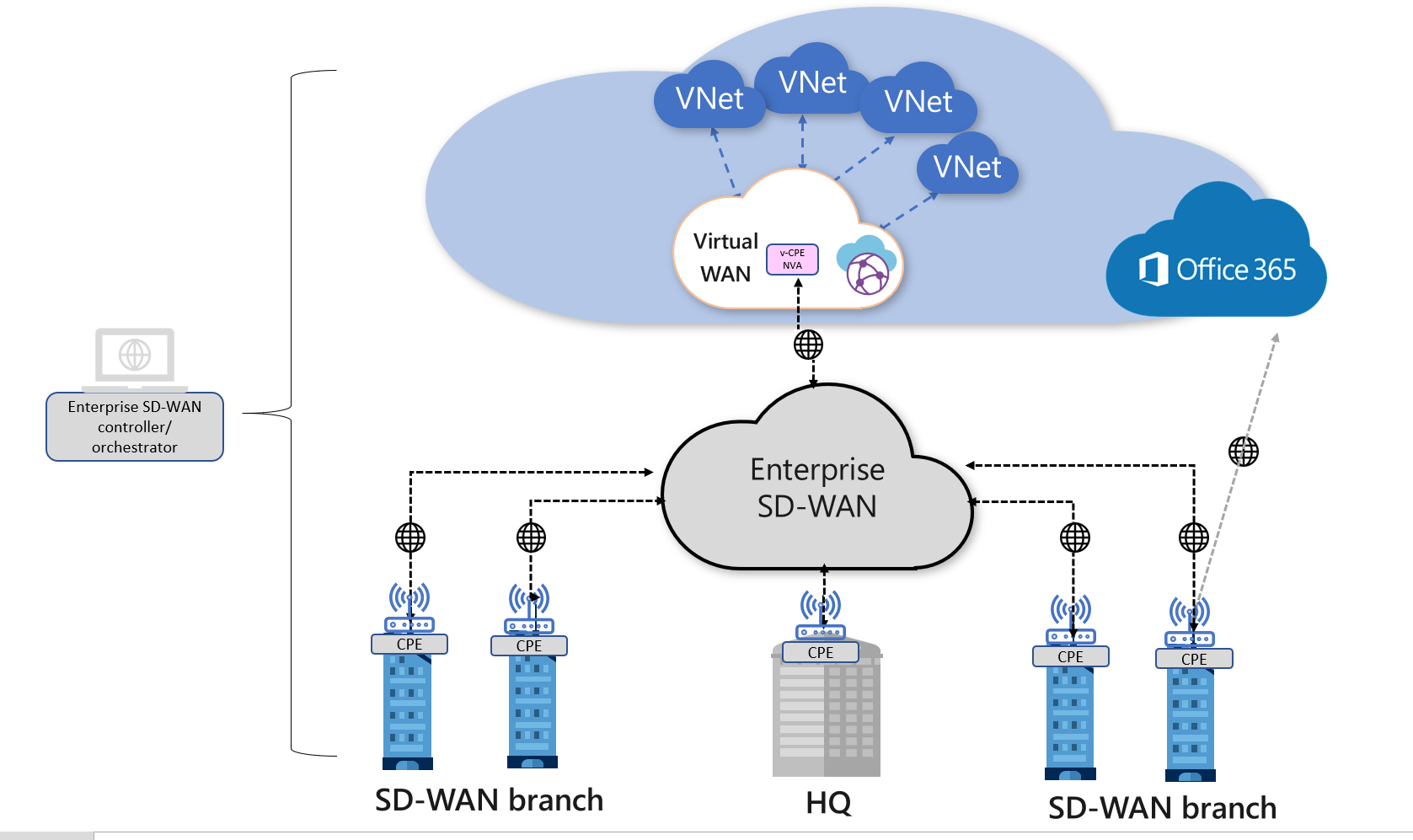 This architecture model supports the deployment of a third-party Network Virtual Appliance (NVA) directly into the virtual hub. This allows customers who want to connect their branch CPE to the same brand NVA in the virtual hub so that they can take advantage of proprietary end-to-end SD-WAN capabilities when connecting to Azure workloads.
Several Virtual WAN Partners have worked to provide an experience that configures the NVA automatically as part of the deployment process. Once the NVA has been provisioned into the virtual hub, any additional configuration that may be required for the NVA must be done via the NVA partners portal or management application. Direct access to the NVA isn't available. The NVAs that are available to be deployed directly into the Azure Virtual WAN hub are engineered specifically to be used in the virtual hub. For partners that support NVA in VWAN hub and their deployment guides, please see the Virtual WAN Partners article.
The SD-WAN CPE continues to be the place where traffic optimization and path selection is implemented and enforced. In this model, vendor proprietary traffic optimization based on real-time traffic characteristics is supported because the connectivity to Virtual WAN is via the SD-WAN NVA in the hub.
This architecture model supports the deployment of a third-party Network Virtual Appliance (NVA) directly into the virtual hub. This allows customers who want to connect their branch CPE to the same brand NVA in the virtual hub so that they can take advantage of proprietary end-to-end SD-WAN capabilities when connecting to Azure workloads.
Several Virtual WAN Partners have worked to provide an experience that configures the NVA automatically as part of the deployment process. Once the NVA has been provisioned into the virtual hub, any additional configuration that may be required for the NVA must be done via the NVA partners portal or management application. Direct access to the NVA isn't available. The NVAs that are available to be deployed directly into the Azure Virtual WAN hub are engineered specifically to be used in the virtual hub. For partners that support NVA in VWAN hub and their deployment guides, please see the Virtual WAN Partners article.
The SD-WAN CPE continues to be the place where traffic optimization and path selection is implemented and enforced. In this model, vendor proprietary traffic optimization based on real-time traffic characteristics is supported because the connectivity to Virtual WAN is via the SD-WAN NVA in the hub.
Indirect Interconnect model
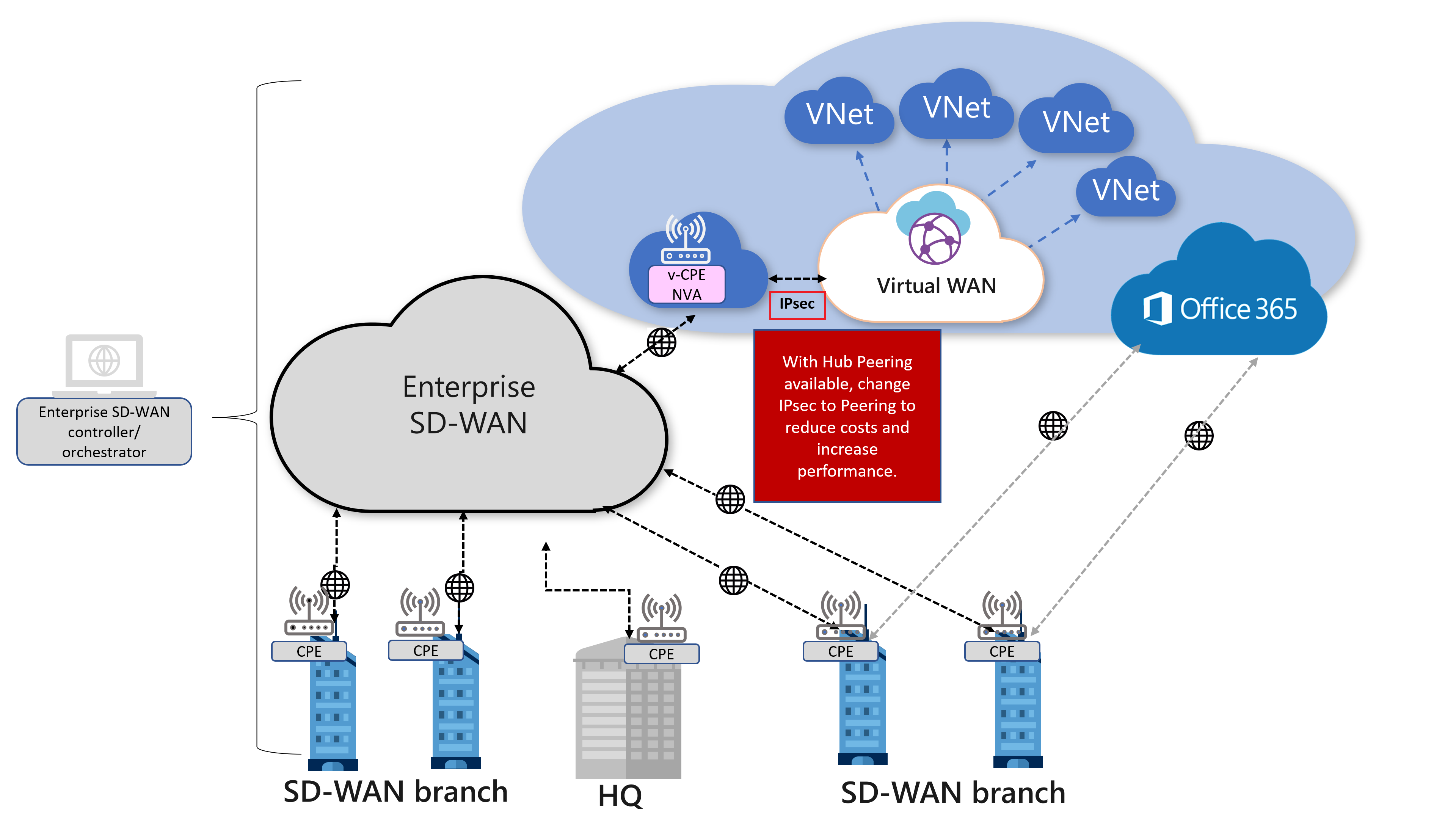 In this architecture model, SD-WAN branch CPEs are indirectly connected to Virtual WAN hubs. As the figure shows, an SD-WAN virtual CPE is deployed in an enterprise VNet. This virtual CPE is, in turn, connected to the Virtual WAN hub(s) using IPsec. The virtual CPE serves as an SD-WAN gateway into Azure. Branches that need to access their workloads in Azure will be able access them via the v-CPE gateway.
Since the connectivity to Azure is via the v-CPE gateway (NVA), all traffic to and from Azure workload VNets to other SD-WAN branches go via the NVA. In this model, the user is responsible for managing and operating the SD-WAN NVA including high availability, scalability, and routing.
In this architecture model, SD-WAN branch CPEs are indirectly connected to Virtual WAN hubs. As the figure shows, an SD-WAN virtual CPE is deployed in an enterprise VNet. This virtual CPE is, in turn, connected to the Virtual WAN hub(s) using IPsec. The virtual CPE serves as an SD-WAN gateway into Azure. Branches that need to access their workloads in Azure will be able access them via the v-CPE gateway.
Since the connectivity to Azure is via the v-CPE gateway (NVA), all traffic to and from Azure workload VNets to other SD-WAN branches go via the NVA. In this model, the user is responsible for managing and operating the SD-WAN NVA including high availability, scalability, and routing.
Managed Hybrid WAN model
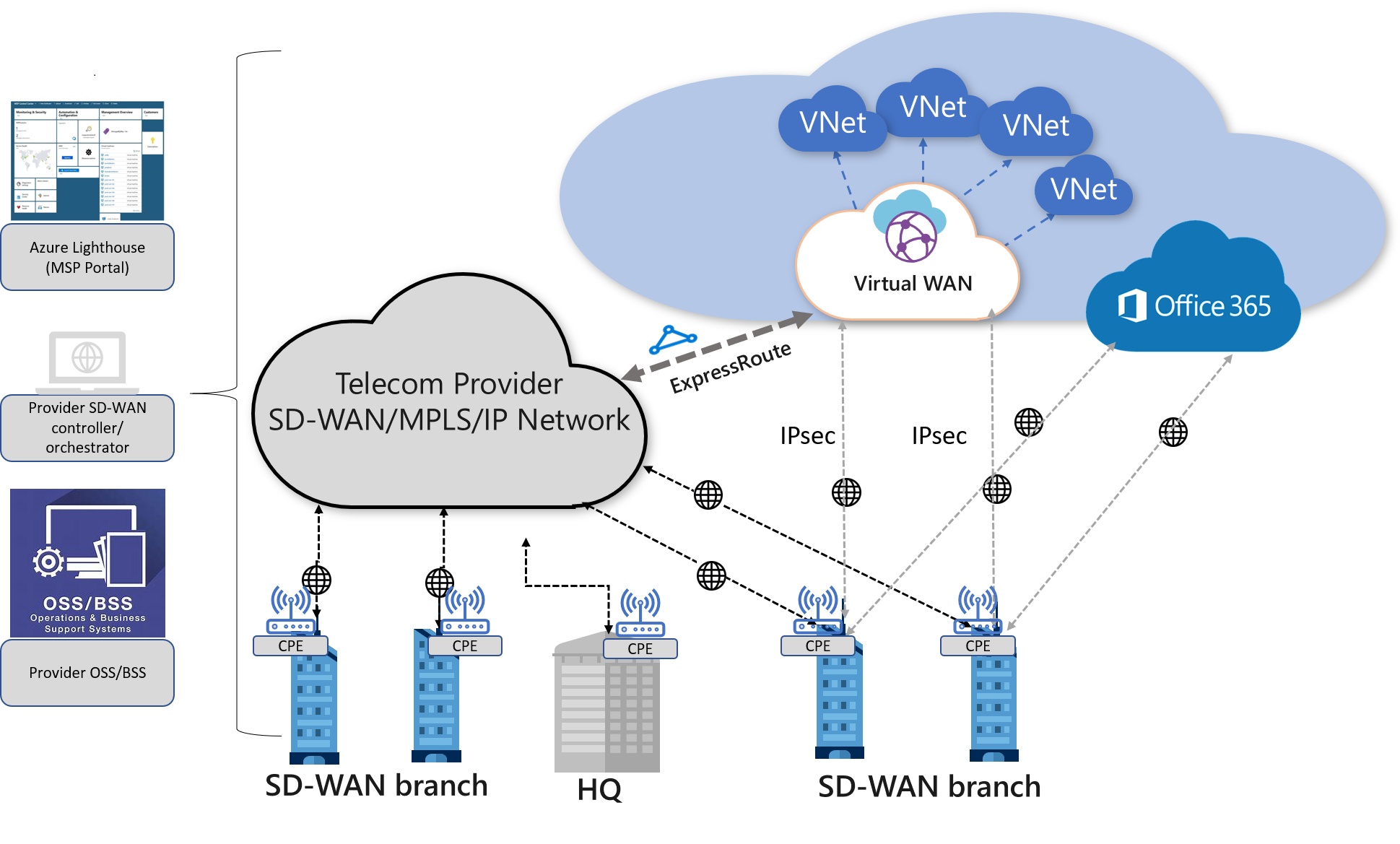 In this architecture model, enterprises can leverage a managed SD-WAN service offered by a Managed Service Provider (MSP) partner. This model is similar to the direct or indirect models described above. However, in this model, the SD-WAN design, orchestration, and operations are delivered by the SD-WAN Provider.
Azure Networking MSP partners can use Azure Lighthouse to implement the SD-WAN and Virtual WAN service in the enterprise customer’s Azure subscription, as well as operate the end-to-end hybrid WAN on behalf of the customer. These MSPs may also be able to implement Azure ExpressRoute into the Virtual WAN and operate it as an end-to-end managed service.
In this architecture model, enterprises can leverage a managed SD-WAN service offered by a Managed Service Provider (MSP) partner. This model is similar to the direct or indirect models described above. However, in this model, the SD-WAN design, orchestration, and operations are delivered by the SD-WAN Provider.
Azure Networking MSP partners can use Azure Lighthouse to implement the SD-WAN and Virtual WAN service in the enterprise customer’s Azure subscription, as well as operate the end-to-end hybrid WAN on behalf of the customer. These MSPs may also be able to implement Azure ExpressRoute into the Virtual WAN and operate it as an end-to-end managed service.